
What is Full Mouth Cleaning?
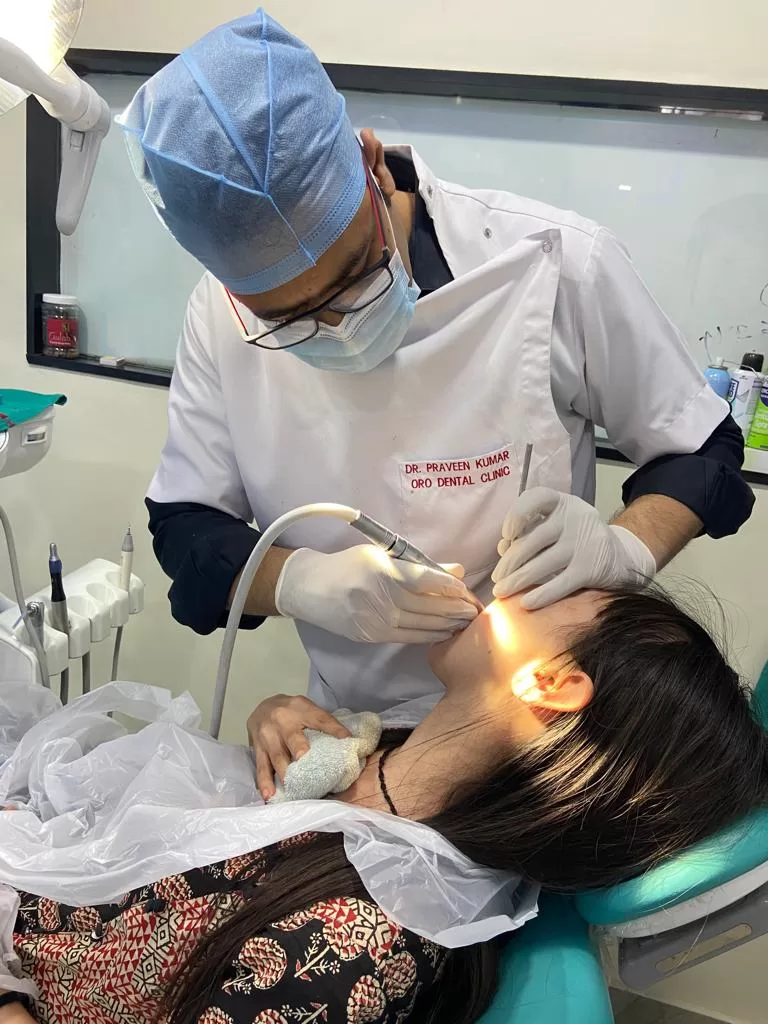
Full mouth cleaning is a professional dental procedure that removes plaque, tartar, and harmful bacteria from your teeth and gums. Even with regular brushing and flossing, some deposits accumulate over time — especially in hard-to-reach areas. If left untreated, these deposits can lead to gum disease, tooth decay, and bad breath.
A full mouth cleaning not only keeps your smile bright but also protects your oral health long-term
Full mouth cleaning Process
Dental Examination
The dentist checks the condition of your teeth and gums to identify plaque, tartar buildup, and any signs of gum inflammation.Scaling
Plaque and hardened tartar are removed using ultrasonic and manual instruments — especially from areas below the gumline that regular brushing cannot reach.Polishing
After cleaning, teeth are polished to remove surface stains and smooth the enamel. This helps reduce future plaque buildup and keeps your smile shining.Rinsing
An antibacterial rinse is used to flush out loosened debris, leaving your mouth feeling fresh and clean.Fluoride Treatment (Optional)
A fluoride gel or varnish may be applied to strengthen tooth enamel and help prevent cavities.
Common Reasons for Full Mouth Cleaning
Plaque and Tartar Buildup
Plaque is a sticky film of bacteria that forms on your teeth every day. If it is not cleaned properly, it hardens into tartar (calculus), which cannot be removed by normal brushing.
Bleeding, Swollen, or Tender Gums
If your gums bleed while brushing or flossing, it is a sign of gingivitis — an early stage of gum disease.
Persistent Bad Breath (Halitosis)
Bad breath is often caused by bacterial deposits trapped around teeth and below the gumline.
Teeth Staining and Discoloration
Daily habits such as tea, coffee, smoking, and spicy food can stain teeth.
Prevention of Gum Disease and Tooth Loss
Without proper cleaning, plaque and tartar can damage the supporting bones and tissues around teeth.
Before and After Dental Treatments
Dentists recommend professional cleaning before procedures like braces, aligners, crowns, or implants to ensure a clean foundation
Who Should Get Full Mouth Cleaning?
Everyone — Adults & Children
Essential for maintaining strong teeth and healthy gums at every age.People with Bleeding, Swollen, or Sensitive Gums
Signs of early gum disease that can be controlled with proper cleaning.Smokers
More prone to plaque buildup, stains, and gum infections — cleaning helps reduce oral damage.Patients with Braces or Dental Restorations
Brackets, wires, crowns, or bridges make cleaning difficult, increasing risk of trapped bacteria and tartar
Why Choose Oro Dental Clinic for Full Mouth Cleaning ?
Experienced Dental Professionals
Our skilled dentists provide gentle and precise cleaning to protect both your teeth and gums.Advanced Technology & Equipment
We use ultrasonic scalers and modern polishing techniques for effective, pain-free cleaning.Customized Oral Care Plans
Every patient gets a personalized hygiene plan based on their oral condition and needs.Comfortable & Hygienic Environment
We maintain strict sterilization and ensure a relaxing experience for every visit.Affordable & Transparent Pricing
High-quality care with reasonable charges — no hidden fees, clear communication.Patient Education & Support
We guide you on proper brushing, flossing, and home care to maintain long-lasting results.